
How to Remove Hard Water Stains From Windows (and Stop Them Coming Back)

Brad Bailey · Co-Owner & Operations Manager
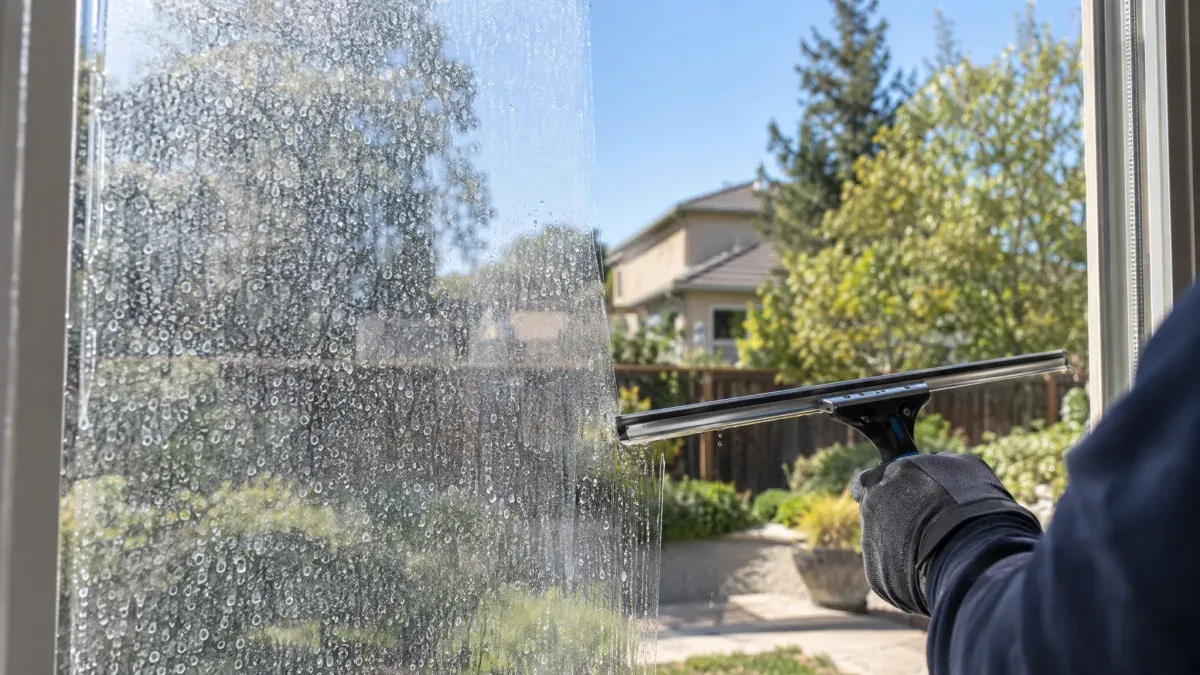
You clean the glass, step back, and the cloudy spots are still there — a dull, chalky film that no amount of spray and wiping seems to touch. If that sounds familiar, you’re not looking at dirt. You’re looking at hard water stains, and they’re one of the most common window problems we see across the Sacramento area.
Here’s an honest look at what they are, how to get them off, and — the part most guides skip — how to stop them from coming back.
What hard water stains actually are
The Sacramento region sits in a mineral-rich part of California. Our tap water carries dissolved calcium, magnesium, and other minerals. When that water lands on glass and dries — whether from a sprinkler, a hose, or a quick rinse — the water evaporates but the minerals stay behind. Over time those deposits build into the white, cloudy, sometimes rainbow-sheened spots you see on the glass.
The biggest culprit in local yards is almost always sprinklers. A head that’s angled even slightly toward the house will mist the windows every cycle, and in our long dry season that can be most of the year. Each watering leaves another thin layer of minerals to bake on in the sun.
Why you can’t just wipe them away
The hard truth: hard water stains are not sitting on the glass the way dust does. Left long enough, the minerals begin to bond with the glass surface and etch it. Early on, the deposits are still on top and can be dissolved and removed. But once etching sets in, you’re looking at microscopic pitting in the glass itself — and no cleaner, cloth, or squeegee will bring that back. At that stage it becomes a glass-replacement issue, not a cleaning one.
That’s why time matters so much with water spots. The longer they bake on, the more likely they cross from “removable” to “permanent.”
DIY approaches — and their limits
For light, recent spotting, homeowners can often make real progress at home:
- White vinegar — a diluted vinegar solution can dissolve light mineral deposits. Let it dwell on the glass rather than wiping immediately, then work it gently.
- Dedicated mineral/water-spot removers — purpose-made products tend to outperform household mixes on moderate buildup.
- Gentle, non-abrasive technique — always. Scrubbing pads, razor blades, and gritty powders can scratch glass permanently, which is a worse problem than the stain you started with.
Where DIY runs out of road is on heavy, long-standing buildup and anything that’s started to etch. If you’ve scrubbed and the haze won’t budge, that’s your sign to stop before you damage the glass — and it’s usually a job for a pro with proper restoration methods. For the gentler, everyday side of things, our rundown of eco-friendly window cleaning products covers what’s safe to reach for.
When to call a professional
Professional water-spot removal is a different process from a standard clean. It can involve controlled mineral dissolving, careful polishing, and purified-water rinsing that leaves nothing behind to re-spot. We reach for it when deposits are thick, widespread, or have begun to etch — the cases where a weekend attempt tends to make things worse. If the haze looks the same from across the room after you’ve cleaned, it’s worth having someone assess whether it’s still removable.
We see this across the suburbs where sprinkler overspray and newer construction come together — plenty of calls out of Roseville, Folsom, and El Dorado Hills, where big lots and irrigation systems keep the glass under near-constant light misting.
How to stop them coming back
Removal is only half the job. If the source is still there, the spots return. The prevention that actually works:
- Adjust your sprinklers. This is the single biggest fix. Point heads away from the house and glass, and your spotting problem largely goes away on its own.
- Don’t let water bake on. If windows get wet from irrigation or washing, the worst outcome is letting it dry in direct sun. Rinsing and drying promptly keeps minerals from setting.
- Clean on a regular rhythm. Consistent cleaning keeps deposits from ever reaching the etching stage — the whole game is removing minerals before they bond. Our guide to keeping windows crystal clear year-round walks through a realistic local schedule.
- Treat shaded and sprinkler-facing windows first. Those are where buildup concentrates.
The bottom line
Hard water stains are a Sacramento fact of life, but they’re not something you have to live with — as long as you catch them before they etch. Light spotting often comes off with patience and the right gentle product at home. Heavy, cloudy, or etched glass is a job for professional restoration, and the real fix in either case is cutting off the source: those sprinklers.
If your windows have a film that won’t wipe away and you’re not sure whether it’s still removable, we’re glad to take a look and give you a straight answer. Learn more about our professional window cleaning service, or get in touch for a free quote for your specific home.
Get a Free Estimate
Ready to see what a professional clean can do for your property? Get your no-obligation quote today.
