
Soft Washing vs. Pressure Washing a Roof — Why High Pressure Destroys Shingles

Brad Bailey · Co-Owner & Operations Manager
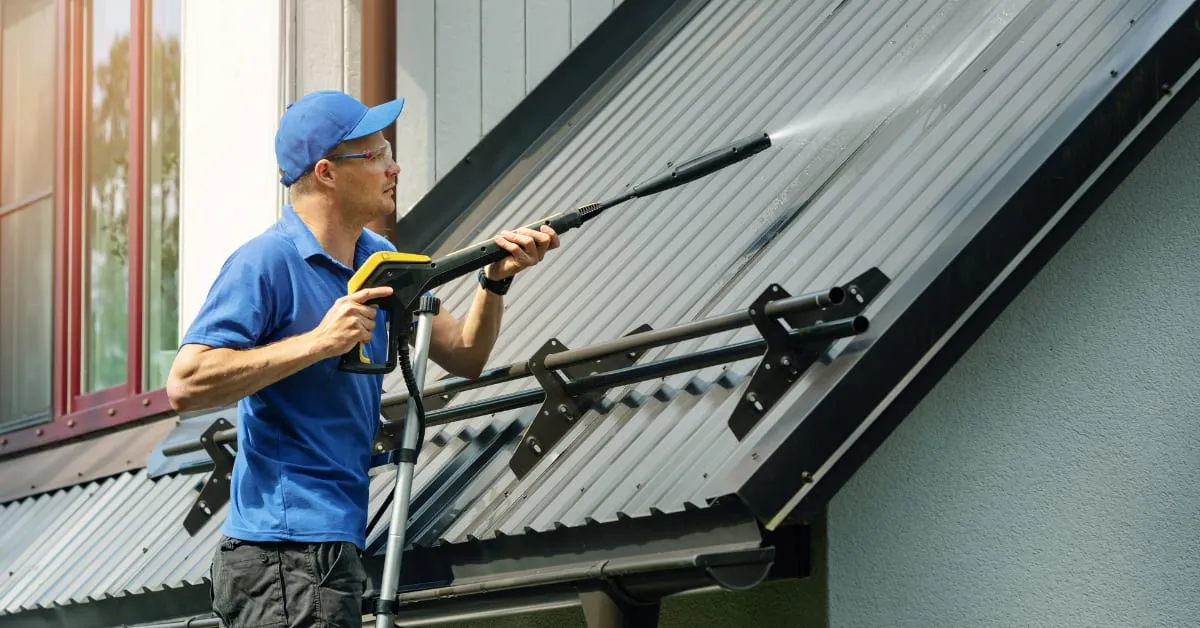
Every so often a homeowner tells us they tried to clean their own roof with a pressure washer, or hired a handyman who did. The streaks came off, the roof looked great for a season — and then the shingles started shedding grit into the gutters, or a few tiles cracked, or the stains came back worse than before.
After 15+ years cleaning roofs across the Sacramento area, here’s the honest version: a pressure washer will clean a roof, the same way a wire brush will clean a car. It works, and it does damage you’ll pay for later. Soft washing is the method built for roofs. Here’s the difference, and why it matters for your specific roof.
Can you pressure wash a roof? Technically yes. Should you? No.
A pressure washer blasts water at force to knock debris off hard surfaces — great for a concrete driveway, wrong for the thing protecting your home. A roof isn’t a solid slab. It’s layered, aging material designed to shed water from above, not to take a high-pressure jet from the side or underneath.
Point that much force at a roof and you’re not just removing stains. You’re removing roof.
What high pressure actually does to your roof
On an asphalt composition roof, the single biggest problem is granule loss. Those tiny mineral granules embedded in the shingle surface are the roof’s sunscreen and armor — they shield the asphalt underneath from UV and weather. High pressure strips them off by the handful. Once they’re in your gutters instead of on your shingles, that section of roof ages faster and fails sooner.
It gets worse:
- It can void your warranty. Virtually every shingle manufacturer specifies low-pressure cleaning only. The Asphalt Roofing Manufacturers Association has long recommended against high-pressure washing of roofs for exactly this reason. Pressure wash the roof and you may forfeit the coverage you paid for.
- It drives water where it doesn’t belong. A jet aimed at the wrong angle pushes water up under shingles and tiles, past the layers meant to keep it out — setting up leaks, rot, and mold in the attic.
- It cracks and chips tile. Older concrete and clay tile is more brittle than it looks. High pressure chips edges and cracks pieces that then have to be replaced.
The damage is often invisible from the ground the day it happens. It shows up later as a shortened roof life and repair bills.
Soft washing: low pressure, real cleaning
Soft washing flips the approach. Instead of relying on force, it relies on the right cleaning solution applied at low pressure — closer to a garden hose than a power washer — then gently rinsed.
That matters because the black streaks and green growth on a Sacramento roof aren’t dirt. The streaks are a hardy algae (Gloeocapsa magma), and the green fuzz on shaded slopes is moss and its root-like structures digging into the surface. Blast them with water and you knock off the top layer, but you leave the organism alive — so it grows right back, often within a season. (We go deeper on this in our guide to removing black streaks and moss from your roof.)
A proper soft-wash treatment kills the growth at the root instead of just rinsing the surface. The roof comes clean without force, and it stays clean far longer because the thing causing the stain is actually dead, not relocated.
Tile vs. shingle: the pressure question gets sharper
The method changes with the material, which is why roof cleaning is never one-size-fits-all. Composition shingle demands care because of granule loss. Tile demands care because of breakage and walkability — concrete and clay crack under both pressure and careless foot traffic. The good news is that soft washing is the right answer for both: low pressure protects shingle granules and spares brittle tile at the same time. We break down the full set of differences in tile vs. composition shingle roof cleaning.
What Bailey Boys uses
We soft wash, full stop. That means roof-safe cleaning solutions applied at low pressure, worked according to the roof type and the severity of the growth, then rinsed — no granule-stripping jets, no walking a fragile tile roof when we can treat it from safer footing. It’s the approach that keeps your manufacturer warranty intact and actually buys you time between cleanings.
It’s also why our work holds up across very different neighborhoods — from the mature tree canopy over Sacramento to the newer tile-heavy subdivisions in Roseville and Rocklin, where roof types and growth patterns are all over the map. If you want the full picture of how a professional job is done the right way, our complete guide to professional roof cleaning walks through it start to finish.
The bottom line
Can you pressure wash a roof? Yes. Should anyone? No. High pressure strips the granules that protect your shingles, can void your warranty, and breaks tile — and because it only rinses algae instead of killing it, the stains come back anyway. Soft washing cleans without the damage and keeps the roof clean longer. If a company shows up to clean your roof with a pressure washer, that’s your sign to send them home.
Want it done the safe way? Learn more about our professional roof cleaning service, or get in touch for a free quote and we’ll tell you straight what your roof needs — and what it doesn’t.
Get a Free Estimate
Ready to see what a professional clean can do for your property? Get your no-obligation quote today.
