
Does Professional Roof Cleaning Actually Extend Your Roof's Life?
Brad Bailey · Co-Owner & Operations Manager
A roof is one of the most expensive things on your house, and replacing one is a project nobody looks forward to. So when homeowners ask whether roof cleaning is “really worth it” or just a cosmetic thing, it’s a fair question — and it deserves a straight answer.
Here’s ours, after years of cleaning roofs across the Sacramento region: yes, keeping a roof clean genuinely helps it reach its full lifespan — but not because cleaning magically adds years. It helps because the moss and algae you’re removing are actively degrading the roof, and stopping that damage early is what protects your investment. The curb appeal is a nice bonus; the real value is in what you’re preventing.
What’s actually growing up there
Those black streaks running down a roof aren’t dirt and they don’t rinse away for long. That’s Gloeocapsa magma, a hardy algae that feeds on the limestone filler in shingles and spreads wherever a surface stays damp. Moss is the heavier problem — it’s a true plant that roots into seams and the gaps between tiles, holds water like a sponge, and keeps growing until something stops it.
In our climate, both have plenty to work with. Wet winters, long damp springs, foothill morning fog, and heavy tree canopy give growth exactly the moisture and shade it wants. Shaded north-facing slopes are usually where it shows up first.
How moss and algae shorten a roof’s life
This is the part that turns cleaning from “cosmetic” into “protective.” The growth isn’t just sitting on top looking bad — it’s working against the roof:
- On composition shingle, algae and moss trap moisture against the surface and can work loose the protective granule layer. Those granules are what shield the shingle from UV and weather, so losing them early ages the roof faster than it should.
- On tile, moss roots into the gaps and can lift and shift tiles over time. Lifted tiles break the roof’s ability to shed water, and water that gets where it shouldn’t is how leaks and rot start.
- In both cases, a roof that stays wet longer — because a mat of growth won’t let it dry — is a roof that deteriorates faster and gives mold and rot a foothold at the roofline.
Left alone, a small algae problem becomes a moss problem, and a moss problem eventually becomes a leak or a repair. That’s the chain regular cleaning is meant to break. We walk through more of it in our guide to protecting your roof and saving thousands in repairs.
Why rinsing it off doesn’t protect anything
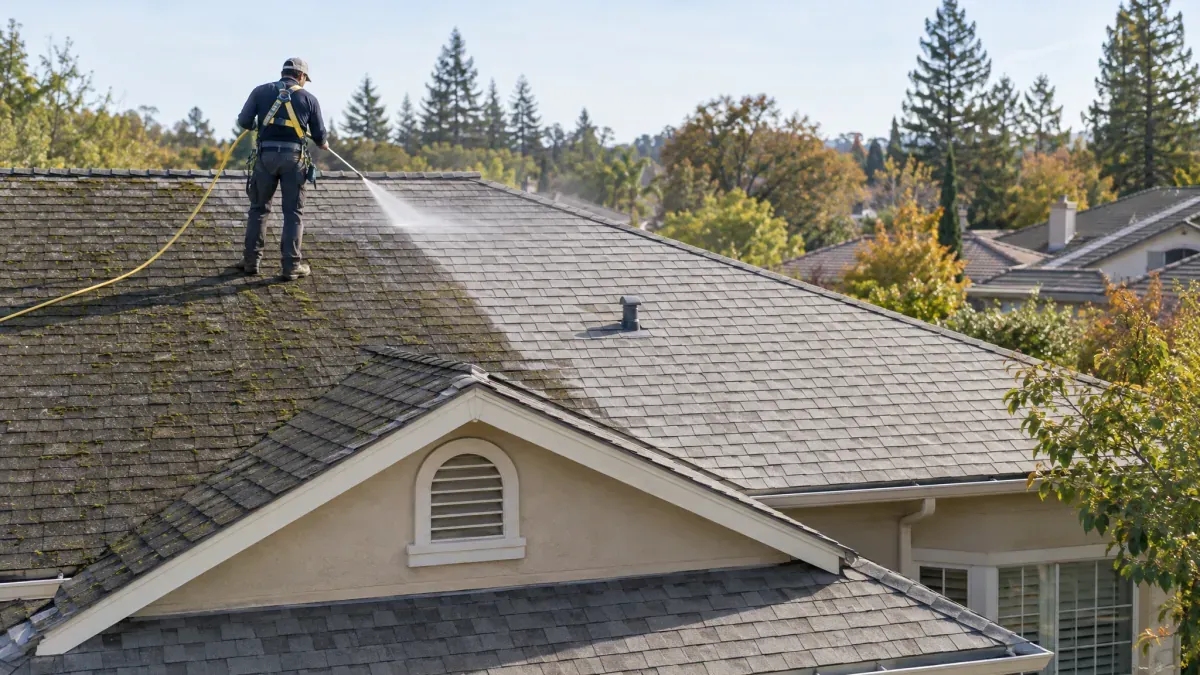
A common instinct is to blast the growth off with a pressure washer and call it done. The problem is twofold. First, high pressure strips the very granules you’re trying to protect and can force water under shingles and tiles — doing more harm than the moss was. Second, spraying only knocks down the surface growth; the algae and moss roots are still there, so it comes right back, often faster.
The method that actually protects the roof is a low-pressure soft wash with a treatment that kills growth at the root, then lets it rinse away gently. That’s what keeps the surface clean long enough to matter — and it’s safe for both shingle and tile. More on that in our complete guide to professional roof cleaning.
The honest way to think about ROI
We won’t throw made-up numbers at you about “years added” or “percent saved” — anyone who does is guessing. But the ROI logic is simple and real:
- A roof replacement is a major expense. Regular cleaning is a minor one by comparison.
- Cleaning doesn’t change the roof’s maximum lifespan — it keeps growth from robbing you of years you already paid for.
- Staying ahead of moss and algae means lighter, less frequent service instead of expensive rescue work once damage sets in.
Think of it the way you’d think about changing the oil in a car. It doesn’t make the engine last forever, but skipping it is how you end up replacing the engine early. How often that maintenance should happen depends on your trees and shade, which we break down in how often you should clean your roof.
Curb appeal and warranty aren’t nothing, either
Two more benefits ride along with the structural ones. A clean roof visibly lifts the whole look of a home — it’s one of the first things buyers and appraisers notice, which matters if a sale is anywhere on your horizon. And many shingle manufacturers expect reasonable maintenance as part of keeping a warranty valid; letting a roof sit under moss for years is the kind of neglect that can complicate a claim later.
Does it vary by neighborhood?
It does. Roofs in the tree-heavy, shaded parts of Sacramento collect more organic debris and stay damp longer, so growth gets going sooner. Newer tile-roof subdivisions around Roseville and Folsom deal less with granule loss but more with moss working into tile gaps — same principle, different failure mode. Either way, catching it early is what protects the roof.
The bottom line
Does professional roof cleaning extend your roof’s life? It protects the lifespan you already paid for by stopping the moss and algae that quietly degrade shingles and lift tiles — and it does it for a fraction of what a premature replacement costs. The curb appeal and warranty upkeep are real perks, but the prevention is the point.
If your roof is streaked, mossy, or you just can’t remember the last time it was looked at, we’re glad to give you a straight read on where it stands. Learn more about our professional roof cleaning service, or get in touch for a free quote.
Get a Free Estimate
Ready to see what a professional clean can do for your property? Get your no-obligation quote today.
